

The Ultimate Guide to Mental Fitness: Everything You Need to Succeed in a Modern Workplace
You are doing a lot.
Between the back-to-back meetings, the pings on your phone, and the weight of your ever-growing to-do list, it’s easy to feel like you’re just barely treading water.
In the modern workplace, the pace doesn't just feel fast: it feels relentless.
But what if you didn't just survive the work week?
What if you had the internal strength to navigate those waves with grace, focus, and a sense of calm?
That is what mental fitness is all about.
It is the proactive practice of keeping your mind as strong and flexible as your body.
Take a breath.
In this guide, we are going to dive deep into how you can cultivate a resilient mindset that thrives in today’s high-pressure environments.
You are more than your productivity
We live in a culture that often equates your worth with your output.
If you aren't "grinding," you're falling behind: or so the story goes.
But the truth is, your brain is not a machine; it is a living organ that requires nourishment, rest, and intentional training.
Mental fitness isn't just about the absence of stress or illness.
It is about having the cognitive and emotional "muscles" to handle challenges without breaking.
When we talk about mental fitness, we are talking about a state of readiness.
It means being able to focus when the world is noisy and stay grounded when things get chaotic.
It’s about moving from a reactive state to an intentional one.
The foundation of real workplace well-being
For a long time, workplace wellness was framed as a gym membership or an occasional fruit basket in the breakroom.
But the modern world asks much more of your mind and nervous system.
Real support must acknowledge the mental load you carry every single day.
When your mind feels steady, work often feels clearer and more manageable.
You are more able to focus on what matters without getting buried under constant pressure.
That shift can soften the heavy feeling of "what is the point?" that so often sits underneath burnout.
You have permission to slow down
One of the most radical things you can do in a busy office is nothing.
We call this "whitespace."
It is the deliberate act of building gaps into your day for reflection and mental recovery.
Your brain needs these micro-moments to process information and reset its stress response.
Try this today: Between two meetings, take exactly sixty seconds.
Don't check your email. Don't look at your phone.
Just sit. Notice the weight of your feet on the floor.
This tiny pause is a mental fitness repetition.
It reminds your nervous system that you are safe and in control.
Strategy is a conversation, not a command
If you are a leader, one of the best ways to support your team’s mental fitness is through transparency.
When people understand the reasoning behind a decision, they feel more connected to the mission.
This reduces the "mental friction" of uncertainty.
Uncertainty is a major driver of anxiety in the workplace.
By making strategy a conversation, you allow your team to find meaning in their daily grind.
Meaning is the ultimate fuel for resilience.
Find your flow in the noise
Have you ever been so deep in a task that you lost track of time?
That is called a "flow state," and it is a superpower for your mental well-being.
The modern workplace is designed to disrupt flow.
Emails, Slack notifications, and "quick questions" pull your attention in a dozen directions.
Every time you switch tasks, you pay a "switching cost" that drains your mental energy.
To build mental fitness, you must protect your focus.
Set boundaries with your digital tools.
Block off "Deep Work" hours on your calendar where you are unavailable for meetings.
Give yourself permission to do one thing at a time.

Community is your greatest anchor
We weren't meant to do this alone.
Isolation is one of the biggest threats to mental health, especially in a world of remote and hybrid work.
While technology can sometimes feel like the source of our stress, it can also be the bridge to our support.
Support matters, and safe spaces to talk can make a real difference.
There is something incredibly healing about realizing that your colleagues or peers are feeling the same pressures you are.
Sharing your struggles in a safe space doesn't make you weak; it makes you part of a tribe.
It reminds you that your worth isn't tied to your "status" or your "performance" but to your humanity.

The transition from student to professional
This shift is particularly vital for those moving from the classroom to the boardroom.
Many forms of student support focus on academic success, but the transition to the workplace requires a whole new set of mental tools.
The structure of school is often clear-cut, but the professional world is messy.
Learning how to manage your energy, set boundaries, and seek help early is the key to long-term retention and success.
If you are a recent grad, remember: you are still learning.
Be as patient with yourself as you would be with a friend.
Small steps to a stronger mind
Building mental fitness doesn't require a lifestyle overhaul.
It happens in the tiny choices you make throughout the day.
Here is a checklist of "micro-moments" to try this week:
The Morning Check-In: Before you open your laptop, ask yourself: "How am I feeling right now?" Take a quiet moment to notice without judging.
The Single-Tasking Hour: Pick one project and give it your full attention for 45 minutes.
The Gratitude Pause: At lunch, think of one thing that went well this morning, no matter how small.
The Hard Stop: Decide what time your workday ends, and actually close the lid of your computer.
These aren't just "self-care" tips; they are foundational habits for a high-performing career.
Using technology to stay regulated
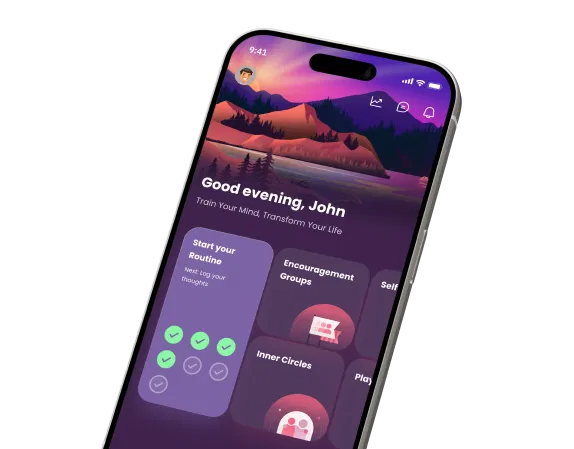
In a world that is always "on," it helps to choose tools that guide you inward instead of pulling you further into noise.
Technology can support your mental fitness when it helps you pause, reflect, and notice your patterns with more compassion.
Simple practices like journaling, mood check-ins, or scheduled breaks can create a steadier rhythm in your day.
When your technology helps you regulate your emotions rather than dysregulate them, you’ve found a powerful ally.

Anchoring yourself in the present
The workplace of the future is unpredictable.
We cannot control the economy, the latest industry trends, or the sudden deadline that lands on our desk on a Friday afternoon.
But we can control our response.
We can anchor ourselves in the present moment.
When you feel the spiral of stress starting, come back to your breath.
Notice the air entering your lungs.
Notice the ground beneath you.
You are here. You are capable. You are enough.
Investing in your team’s mental strength
If you are a manager or a business owner, your greatest asset isn't your product: it’s the collective mental fitness of your people.
Supporting your team’s well-being is not "soft."
It is part of building a workplace where people can think clearly, recover honestly, and contribute sustainably.
A team that feels safe and supported is a team that takes risks and solves problems.
Create a culture where it is okay to not be okay.
Encourage people to use their vacation days.
Model healthy boundaries yourself.
A gentle reminder for the journey ahead
Mental fitness is a journey, not a destination.
There will be days when you feel incredibly strong, and there will be days when you feel fragile.
Both are okay.
The goal isn't to be perfect; the goal is to be present.
You are allowed to have a "bad" day.
You are allowed to ask for help.
In fact, asking for help is one of the strongest mental fitness moves you can make.
Whether it’s through a trusted friend, a mentor, a therapist, or a supportive community, connecting with others lightens the load.

Your next steps
As you head back into your workday, carry this sense of permission with you.
Permission to take a break.
Permission to focus.
Permission to be human in a digital world.
Return to these reminders whenever the pressure starts to rise.
Take the tiny pause.
Choose the next right thing.
Let that be enough for today.
You don't have to navigate the modern workplace alone.
We are in this together.
Stay steady, stay grounded, and most importantly, stay kind to yourself.


.webp)


